

Blog
Tyre Repair: The Complete UK Driver’s Guide to Punctures and Tyre Safety

Spotting a flat tyre is frustrating enough. Then comes the worry: will the garage tell me I need a brand-new tyre when a simple tyre repair would do? You want to stay safe and legal without paying for parts you do not need.
This guide explains everything a British driver needs to know about tyre repair: when a puncture can be repaired under the British Standard BS AU 159, when a tyre must be replaced, how to stay within the law on tread depth and what to do if your tyre pressure warning light comes on.
Key points
- Professional tyre repairs in the UK must follow British Standard BS AU 159.
- Only punctures in the central part of the tread can be repaired, and the hole must be no larger than 6mm on a car tyre.
- The tyre must come off the wheel so it can be inspected inside.
- Tread depth, age and condition all affect whether a repair is worth doing.
- A mobile fitter can repair or replace your tyre at home, at work or at the roadside.
Why a proper tyre repair matters
A professional tyre repair is much more than plugging a leak. When a nail or screw goes through the tread, it can damage the layers inside the tyre. Leave it, and at motorway speed the tyre could fail suddenly, leading to a loss of control. Driving on a flat can also damage your alloy wheels.
When the damage allows, a repair is also good value. It costs far less than a new tyre and keeps a perfectly good tyre out of the scrapyard. Knowing the basics helps you understand what the fitter tells you and makes sure you are not charged for work you do not need.
What is BS AU 159?
BS AU 159 is the British Standard for repairing car and van tyres. It sets out exactly which punctures can be repaired, how the repair must be done and which tyres must be replaced.
You may see DIY string plugs for sale in motor shops, but these are only temporary. They do not seal the inner lining of the tyre properly, which can let moisture reach the steel belts inside and cause hidden corrosion. A professional repair uses a combined plug and patch fitted from inside the tyre, which seals the hole and reinforces the inner lining.
Tyre repairs and your MOT
Your car can fail its MOT if a tyre repair is unsafe. Testers look for repairs outside the permitted area, patches that are lifting and signs of damage to the cords inside. These are treated as serious defects. Keep the paperwork from any professional repair, as it shows the work was done properly. You can book an MOT with us and have any tyre issues sorted at the same time.
Which punctures can be repaired?
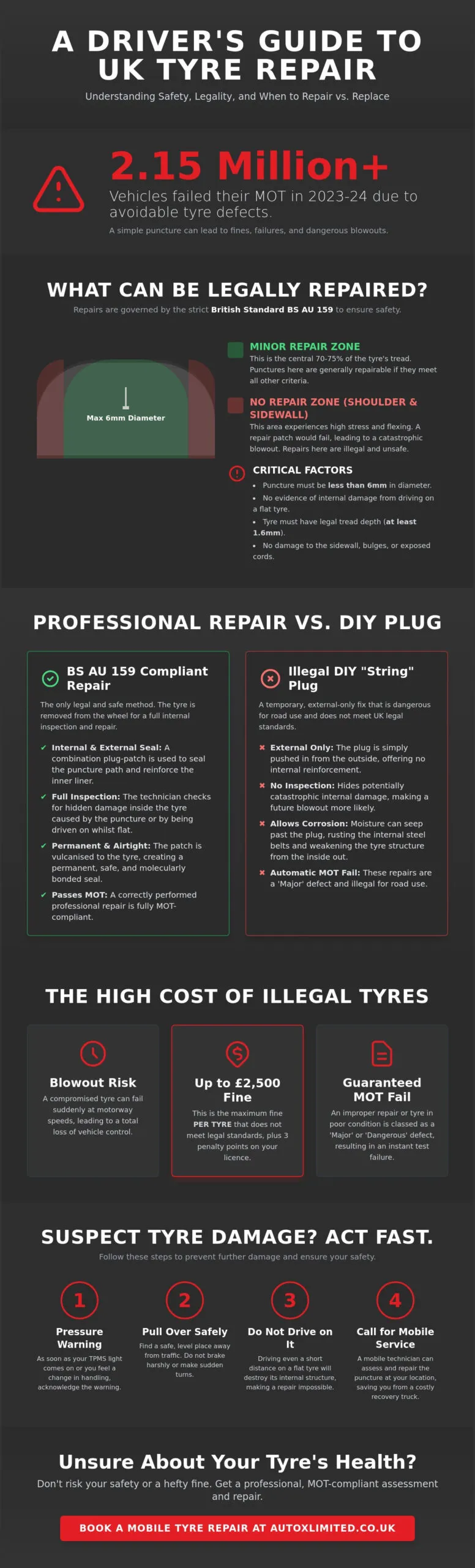
Not every hole can be repaired safely. For a car tyre, BS AU 159 only allows repairs in the central part of the tread, known as the minor repair area. The hole must be no larger than 6mm across. If the damage is bigger than that, or outside the central area, the tyre needs replacing.
The angle matters too. A nail that has gone straight in is usually easier to repair than one that has entered at a sharp angle and torn a long path through the rubber.
The repair zone explained
Picture your tyre’s tread divided into a central strip and two outer edges. Repairs are only allowed in the central strip. The shoulders and sidewalls flex every time the wheel turns or the car goes round a corner, so a patch there would soon work loose. These limits are there to prevent dangerous failures on the road.
Why the tyre must come off the wheel
A proper repair cannot be done with the tyre still on the wheel. An outside-only plug can hide damage inside the tyre. The fitter needs to remove it and check the inner lining for creasing, or for grey, powdery rubber. Both are signs the tyre has been driven while under-inflated, which can ruin it from the inside even if the hole looks small. Only a full inside check shows whether the tyre is strong enough to go back on the car.
Tyre repair or replacement: which makes sense?
First, look at the tread depth. The legal minimum for cars in the UK is 1.6mm. If your tyre is close to that, paying for a repair is a false economy, because you will need a new tyre soon anyway. Many experts recommend replacing tyres at around 3mm for better grip in the wet. If the tread is healthy, a repair is a sensible way to save money.
Age matters too. Rubber hardens and cracks over time. Look for fine cracks in the grooves or on the sidewall. Many tyre specialists advise against repairing older tyres, especially those more than six years old, because the rubber may not hold a repair well. If a tyre is old or badly damaged, a new budget tyre is often the safer and better-value choice. Browse our budget tyres, all new, with free mainland UK delivery.
When a tyre must be replaced
Some damage cannot be repaired:
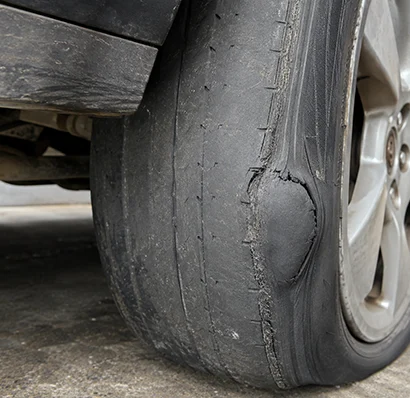
- A bulge or bubble in the sidewall means the inside of the tyre has failed. Driving on it risks a blowout.
- A cut that shows the cords or metal inside means the tyre is beyond saving.
- Damage in the shoulder or sidewall cannot be repaired under BS AU 159.
- A hole larger than 6mm cannot be repaired.
- Run-flat tyres that have been driven on while flat often have hidden damage, and many manufacturers advise against repairing them.
The hidden cost of DIY sealant kits
Emergency sealant cans are popular, but they come at a price. The sealant coats the inside of the tyre, which can make a proper repair difficult or impossible afterwards, because the patch cannot bond to the rubber. Sealant can also hide internal damage. Use it only to get somewhere safe, and tell the fitter you have used it.
How a professional tyre repair is carried out
A proper tyre repair follows a set process. Knowing what should happen helps you spot a good fitter and makes sure you get a repair that lasts.
- Find the puncture. The fitter checks the tyre and locates the nail, screw or damage.
- Remove the tyre from the wheel. This is essential so the inside can be inspected.
- Inspect inside and out. The fitter looks for damage to the inner lining, signs the tyre was driven flat and any other punctures.
- Check the repair area and size. The damage must be in the central part of the tread and no more than 6mm across.
- Prepare the hole. The damaged area is cleaned and prepared so the repair can bond properly.
- Fit the repair. A combined plug and patch is fitted from the inside to seal the hole and reinforce the lining.
- Refit, inflate and balance. The tyre goes back on the wheel, is inflated to the correct pressure and the wheel is balanced.
- Final checks. The fitter checks for leaks and tightens the wheel nuts to the correct setting.
If any of these steps are skipped, particularly the internal inspection, the tyre repair may not be safe.
Slow punctures: the silent problem
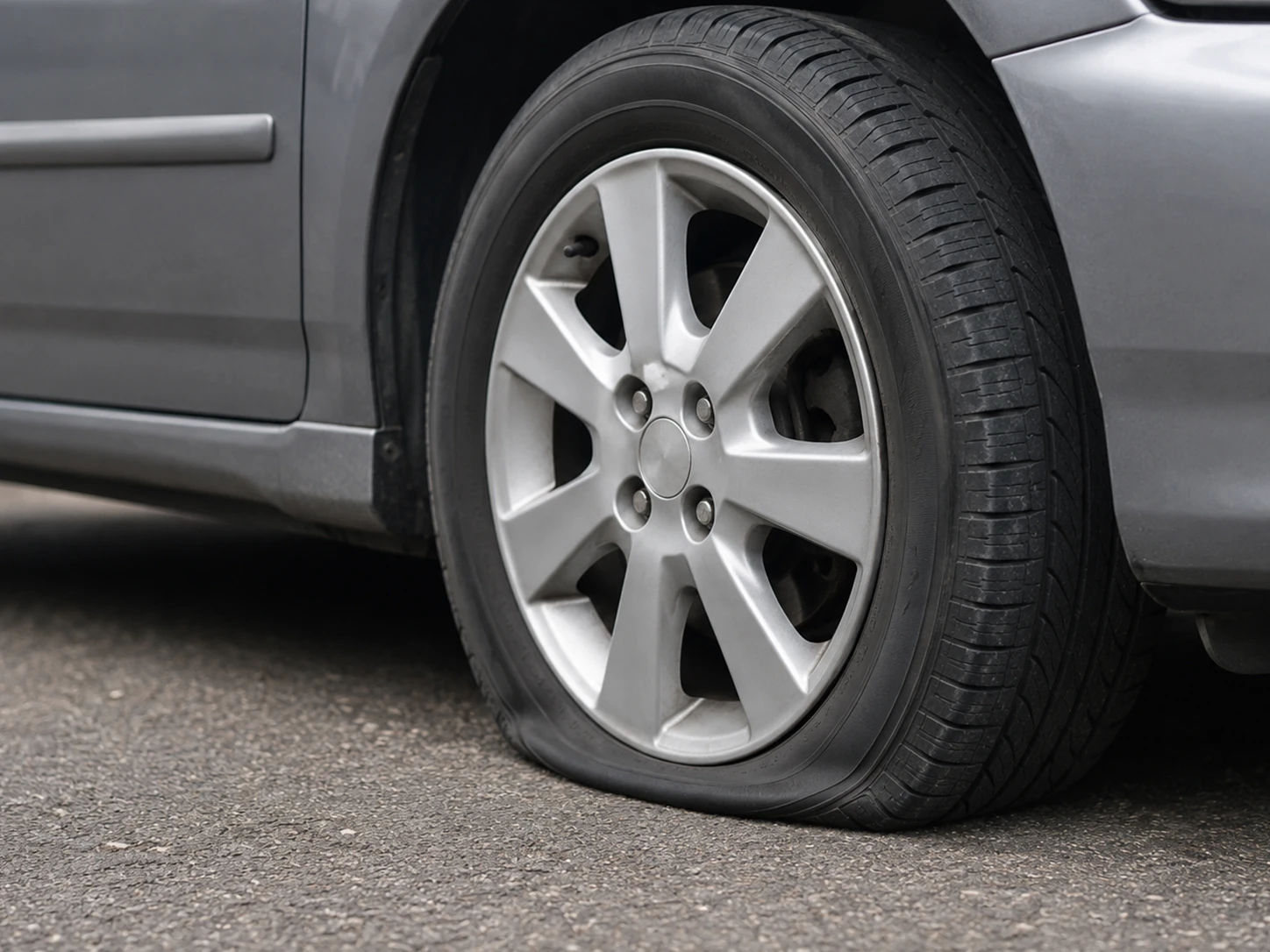
Not every puncture leaves you with a flat tyre straight away. A slow puncture lets air escape gradually, sometimes over days or weeks. You might notice you are topping up the same tyre more often than the others, or the tyre pressure warning light keeps coming back on.
Slow punctures are often caused by a small nail or screw, a leaking valve or a poor seal between the tyre and the wheel, especially on corroded alloy wheels. Driving on an under-inflated tyre wears it unevenly, increases fuel use and can damage the tyre inside. If you suspect a slow puncture, get it checked early: it is often a simple and cheap tyre repair.
Tyre pressures: the easiest way to avoid problems
Correct tyre pressures help your tyres last longer, give you better grip and braking, and reduce fuel use. Check them at least once a month and before long journeys, when the tyres are cold.
You will find the correct pressures in your car’s handbook, on a sticker inside the driver’s door or inside the fuel filler flap. Many cars need higher pressures when fully loaded, so check the loaded figures before a holiday. If you need help, our tyre services team can check and set them for you.
The 20p test for tread depth
A quick way to check your tread is the 20p test. Place a 20p coin into the main grooves of the tyre. If you can see the outer band of the coin, your tread may be close to the 1.6mm legal limit and you should have it checked. Do this at several points around the tyre and across its width, because tyres can wear unevenly.
Tyre repair costs: what to expect
A professional tyre repair is usually much cheaper than buying a new tyre. The exact price depends on whether you bring the car to us or we come to you, and whether it is a planned visit or an emergency call-out. We always give you a clear price before we start. If the tyre cannot be repaired, we will explain why and give you the price of a new tyre instead. Our budget tyres are all new, with free mainland UK delivery and multi-buy savings of up to 8%.
What to do if you think a tyre is damaged
If your tyre pressure warning light comes on, act straight away. Pull over somewhere safe and level, away from traffic, and switch on your hazard lights. Do not try to limp home or to the next services. Driving even a short distance on a flat tyre builds up heat that can destroy it from the inside and rule out a repair.
Prevention is always better than a roadside emergency. Check your tyre pressures every couple of weeks when the tyres are cold, and look for glass or stones stuck in the tread. If one tyre keeps losing a few PSI, you probably have a slow puncture. Sorting it early usually means a simple, low-cost repair.
Signs of a puncture
- A regular ticking or clicking noise, which often means a nail or screw is stuck in the tread
- The steering pulling to one side
- The car feeling heavy or sluggish
- One tyre looking lower or more squashed than the others
- The tyre pressure warning light coming on
If a tyre feels or looks wrong, get it checked as soon as possible.
Staying safe while you wait
On a motorway, try to leave at the next junction. If you cannot, stop in an emergency area or on the hard shoulder. Never try to change a wheel yourself on a hard shoulder or narrow roadside. It is far too dangerous. Get out on the side away from traffic and wait behind the barrier, with your phone charged.
Then get in touch with our 24/7 mobile tyre fitting team. We come to you, so you do not have to risk driving on a damaged tyre.
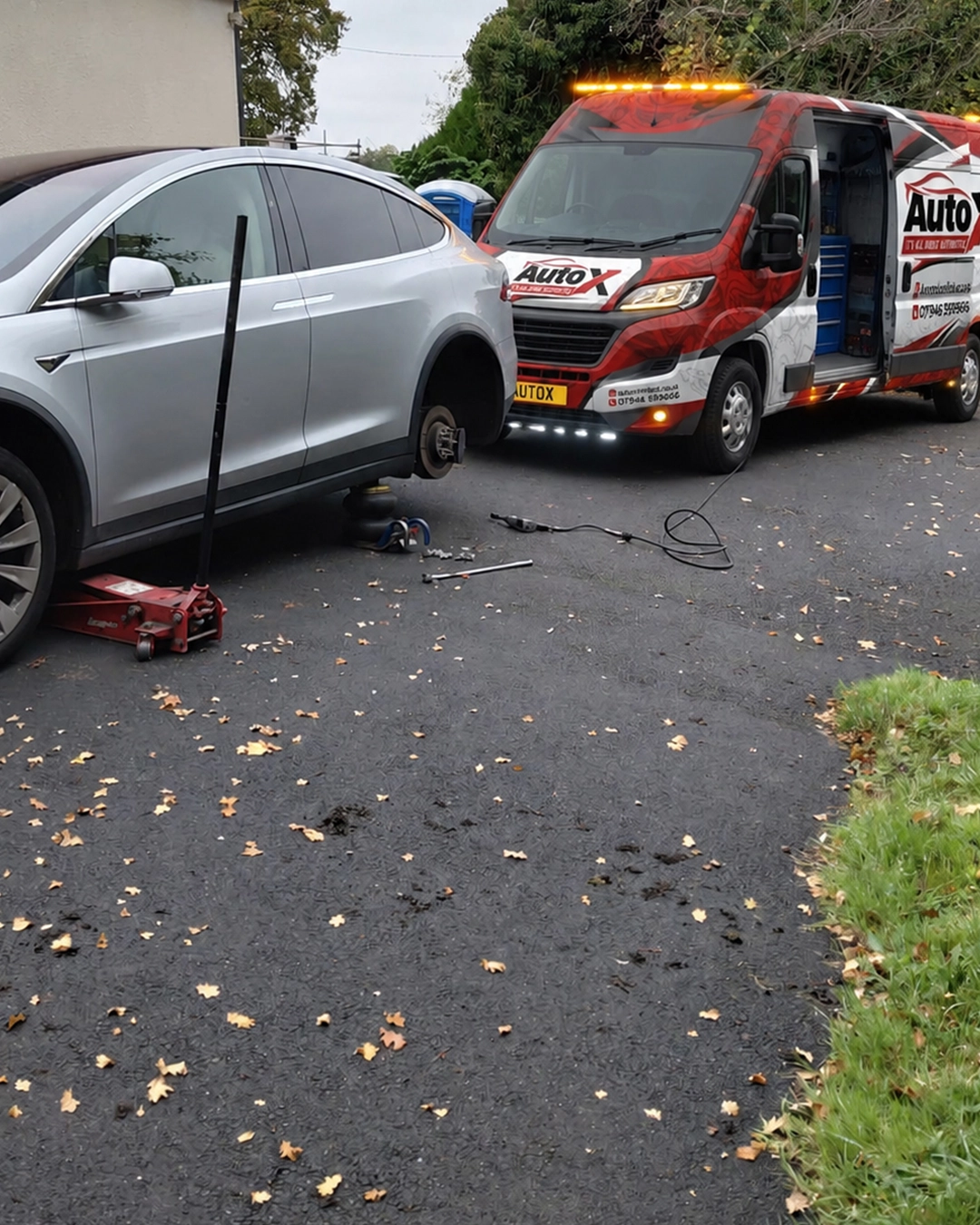
Mobile tyre repair: we come to you
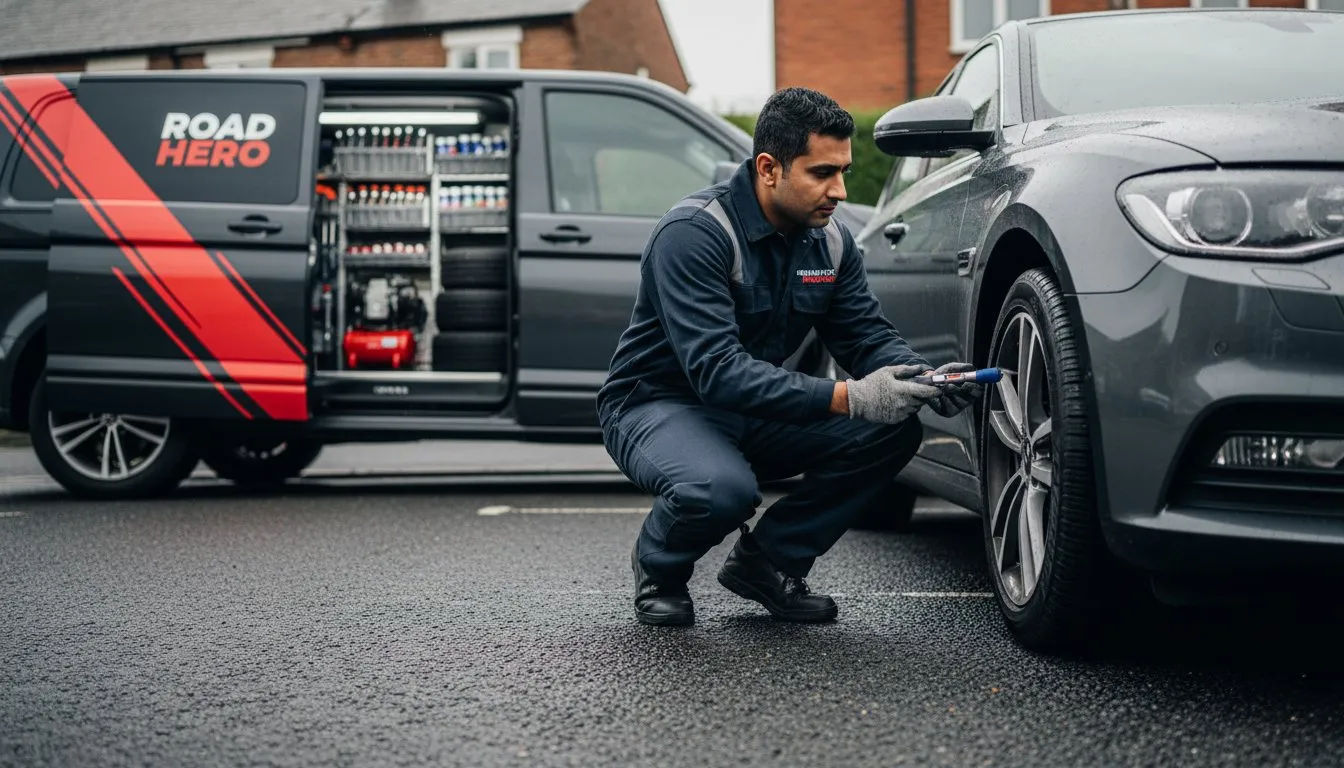
Getting to a garage with a flat tyre is a hassle. You either risk driving on it or wait for a recovery truck. A mobile tyre repair service solves that. Our fitters arrive with the equipment needed to remove the tyre, inspect it inside, repair it where the damage allows and balance the wheel.
That means you can stay at home or carry on working while we sort the tyre. If our inspection shows the puncture cannot be repaired, we can fit a new tyre instead, so in most cases the job is done in one visit. If the wheel is damaged or the car cannot be made safe, we can also recover the car.
How to book a tyre repair
Phone us on 07946 599666 or send us a WhatsApp message. To help us reach you quickly, tell us:
- Your exact location, or share a location pin
- Your tyre size, which looks like 205/55 R16 on the sidewall
- Where the damage is and whether you have driven on the tyre while flat
Not sure of your size? Our tyre size guide explains how to read it. You can also learn more about our puncture repair service in Slough.
Take control of your tyre safety
Looking after your tyres does not have to be stressful. Know the limits of BS AU 159, recognise the damage that cannot be repaired and check your pressures regularly. A professional tyre repair is good value and keeps your car safe and ready for its next MOT, without the need to risk a drive to a garage.
Frequently asked questions
Is it cheaper to repair a tyre or buy a new one?
A repair is usually much cheaper than a new tyre. If the damage can be repaired safely and the tread is healthy, it is a sensible way to get more life from the tyre.
Can a tyre with a nail in the sidewall be repaired?
No. Repairs to the sidewall or shoulder are not allowed under BS AU 159, because these areas flex too much for a patch to hold safely. The tyre must be replaced.
How long does a tyre repair take?
A standard puncture repair usually takes around 30 minutes, including removing the tyre, inspecting it inside and fitting the repair.
Can run-flat tyres be repaired?
Many manufacturers advise against it once a run-flat has been driven on while deflated, because the reinforced sidewall may have hidden damage. Replacement is usually recommended.
Is a repaired tyre safe at motorway speeds?
Yes. A professional repair carried out to BS AU 159 is designed to be permanent and safe at legal speeds, as long as the tyre was in good condition inside.
What is the legal minimum tread depth in the UK?
For cars, it is 1.6mm across the central three-quarters of the tread, all the way around the tyre. Driving below the limit can mean a fine of up to £2,500 and three penalty points for each illegal tyre.
Can a tyre that has been driven on while flat be repaired?
Usually not. Driving on a flat tyre often damages the inner lining and the structure of the tyre. The fitter will check for this during the internal inspection.
Does a tyre repair last for the rest of the tyre’s life?
A professional repair is designed to last for the remaining life of the tyre, as long as you keep the pressures correct and the tread stays above the legal limit.
Can a slow puncture be repaired?
Often, yes. If the cause is a small nail or screw in the central tread, a standard tyre repair usually fixes it. If the leak is from the valve or the wheel rim, the fitter can replace the valve or clean and reseal the rim.
Should I use a sealant can?
Only to get somewhere safe. Sealant can make a proper repair harder afterwards, so always tell the fitter if you have used it.
Do you offer mobile tyre repair in Slough?
Yes. Our mobile team carries out tyre repair at your home, workplace or the roadside across Slough and the surrounding area, 24 hours a day.

One thought on “Tyre Repair: The Complete UK Driver’s Guide to Punctures and Tyre Safety”